Posts

Faith, science and epistemology
Image
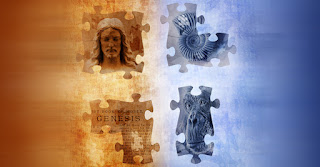
Nothing is worse than faith that gives the illusion of ultimate knowledge, for example Catholicism's claim to be the depositary of Truth. Becoming aware of our ignorance leads to a more modest attitude which is also more in keeping with our human condition. From subjection to emancipation. In relation to religion, the history of science is essentially that of the passage from subjection to emancipation. In 391, Emperor Theodosius I decreed that Christianity was the state religion of the Roman Empire. By banning "pagan" cults, he established a widespread and institutionalised intolerance to which the ecclesiastical authorities adhered. For example, in 393, he had the Olympic Games banned because they were considered too pagan. The authoritarian attitude of the Church is based on the doctrine of the "just persecution" of St. Augustine (354 - 430): " If we want to be true, then let us say that the persecution of the ungodly against the Church of Christ is unju...

Pascal's wager 4/4: Reversal. What minimises loss, Christianity or atheism?

Image
God does not promise paradise, but Judgement Day. By making a promise - Paradise - that commits a third party over whom he has no control - God - the proponent of Pascal's Wager is using a process similar to that used by swindlers. Since the wager focuses on the reward of paradise, if, more honestly, we also take into account hell, we come to the opposite conclusion. Since the number of religions is unlimited, in order to simplify the reasoned choice, let us choose two clear-cut positions, a family of religions and an absence of religion: Christianity and Atheism, and compare them. According to Christianity, our path of life ends by splitting in two: on one side purgatory then eternal paradise, on the other side hell and eternal suffering. Certainly the most interesting perspective is paradise. But, according to Luke 13:23-25, " Someone asked him, “Lord, are only a few people going to be saved?” He said to them, “Make every effort to enter through the narrow door, because many...

Pascal’s wager 3/4: Mathematical model and rebuttal

Image
It is legitimate to put Pascal's wager on the school curriculum. But it happens that some teachers, with little respect for secularism, develop this theme beyond what is required by the culture to make it a missionary tool, the aim being to prepare the pupils to welcome the faith1. When ideology prevails over the critical sense, the pupil must perceive it clearly. Reason then requires a counterweight to be opposed to it. Pascal's wager « But your bliss? Let us weigh the winning and the loss, betting that God is. Let us consider these two cases: if you win, you win everything; if you lose, you lose nothing. Wager, then, that He is, without hesitation. » Blaise Pascal, Thoughts, 1670 The reasoning behind Pascal's wager is circular Let us temporarily assume the value of one chance in two for the probability that God exists. If this is the case, one gains eternal life in Paradise, and the gain is infinite. If not, one loses nothing. The choice seems easy to make. However, one m...

Pascal's wager 2/4: On the likelihood that a given religion is true

Image
If God is, who is? One of two things: "God is, or he is not." This is an irrelevant, even smoky way of approaching the question of God's existence. It can only be reduced to an alternative if one specifies which God one wants to talk about. Between "a Creative Force", pantheism and the "God of Christians", an infinite number of distinct divinities can be envisaged. However, for Pascal's wager to make sense, it is necessary to admit that it is quite probable that the soul is immortal, that we can influence our future in the afterlife from now on, that there are deities who observe us, judge us, reward or punish us, that rituals can arouse divine favours. This is, roughly speaking, what Pascal calls the god of philosophers. These implicit assumptions, which seemed weak at the time, are now perceived as rather far from the obvious. In order to complete his reasoning and reach the God of the Christians, Pascal then devotes almost half of his Thoughts t...

Pascal's wager 1/4: What kind of bets should be put on the table?

Image
In the way we look at the past, we must keep a sufficient critical distance. On the one hand, the historical description must be factual. Pascal's wager must be approached with neutrality, placing him in his own time and not judging him by current criteria. At the time, the calculation of probabilities did not yet exist. It was Pascal who took the first steps in the creation of a new chapter in mathematics, for which we are indebted to him. Pascal is a great spirit that I respect. Concerning the calculation of limits and the convergence of sequences, rigorous definitions were only established in the 19th century. On the other hand, I denounce a way of presenting the history of Western culture when it is imbued with a missionary spirit. In particular, certain Catholic circles have made Pascal's wager a tool for 21st century indoctrination. More generally, this attitude tends to affect all those who attribute a sacred value to spiritual traditions. My criticism does not focus on ...

Absolute truth has the major defect of being multiple

Image
Whereas science establishes only provisional truths at the cost of gigantic efforts, religious truth is absolute, immutable and is simply given to us to believe. What a contrast! Truth-seekers therefore have a great advantage in avoiding science and entering religion. In the religious field The truth is given. It only asks to be listened to. We have immediate and unimpeded access to it. In the scientific field The search for truth is a difficult and demanding task. The study of science gives us a lesson in modesty. In the religious field The only truth is the word of God. For example, for the Catholic Church: "God is the Author of Sacred Scripture. The divinely revealed truth contained and presented in the books of Sacred Scripture has been recorded there under the inspiration of the Holy Spirit". It is enough to believe in it. The Catholic Church adds dogmas, including that of pontifical infallibility. Believing in it is obligatory. In the end, truth is defined by obedience ...

The menace of hell

Image
Some avatars of the French adage "He who loves well punishes well" are flamboyant. Churches praise God's love without insisting as much as in the past on the intimidation that accompanies it: [Matthew 13:41-42] "The Son of Man will send out his angels, and they will weed out of his kingdom everything that causes sin and all who do evil. They will throw them into the blazing furnace, where there will be weeping and gnashing of teeth." Believers hold their breath, but find it right that God resorts to eternal torments. One would have expected a justice more concerned with proportionality, for on earth, even inflicted by the worst sadists, every punishment has an end. Moreover, justice that respects human rights does not resort to punitive torture. What a striking contrast with the message of forgiveness: [Matthew 5:44] "But I say to you, love your enemies and pray for those who persecute you". Unfortunately, any approach that falls under the principle ...